Pipe Lining vs Pipe Bursting: 6 Differences That Decide Which You Need
Pipe lining vs pipe bursting is the choice most homeowners face once a camera shows their sewer line needs more than clearing. Both are trenchless, both work from small access points, and both are usually done in a day, occasionally two. They are not two brands of one fix, though. A liner builds a new pipe inside the old one, while bursting destroys the old one and pulls a new pipe into the space it leaves.
Which one fits comes down to six differences, and the camera footage answers most of them before anyone talks price. If you already have video of your line, a local sewer contractor can often tell you which way it is likely to go from that alone.
1. What each method actually does
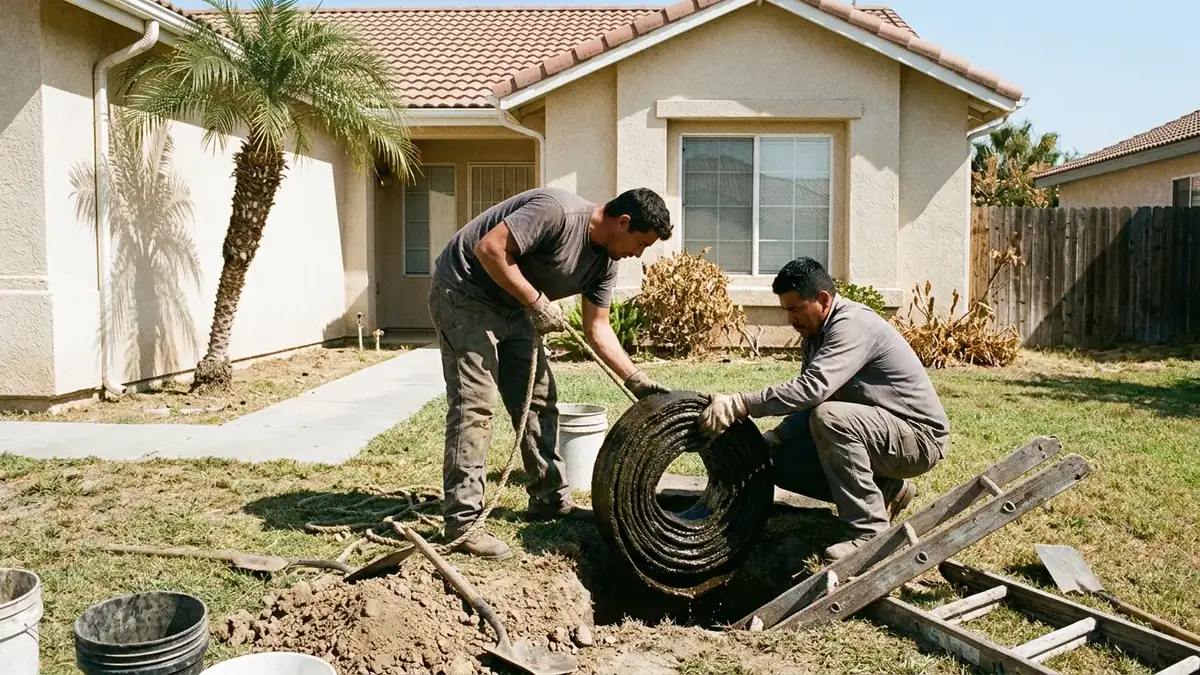
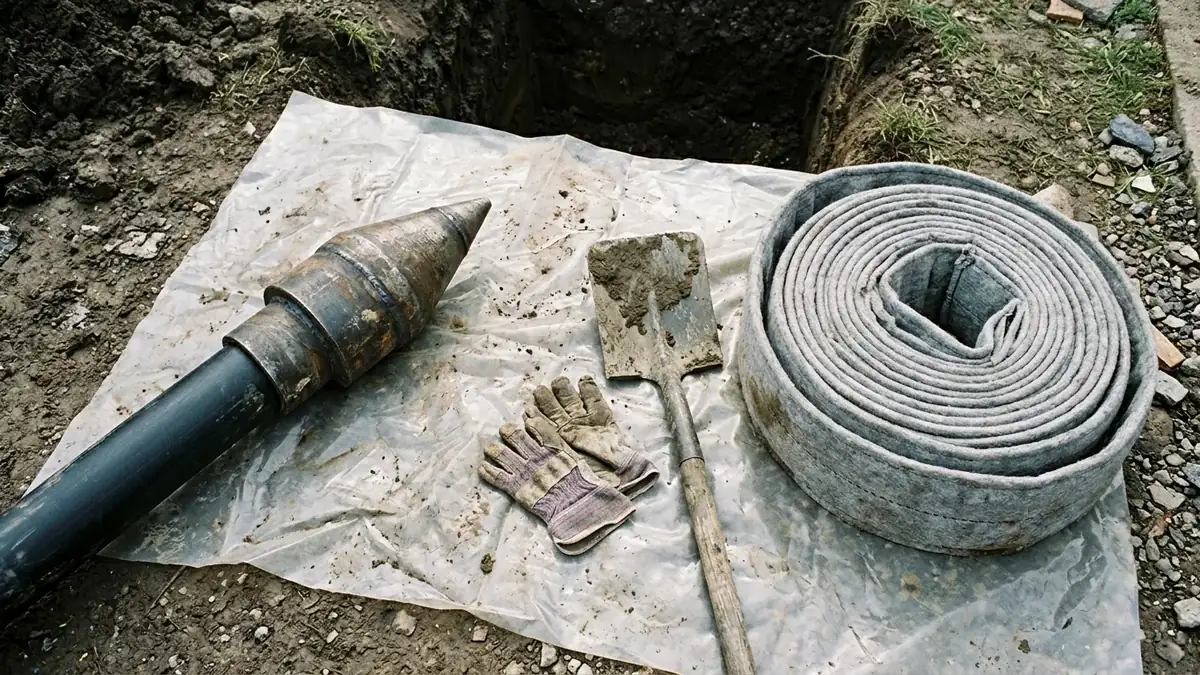
Cured-in-place lining, usually shortened to CIPP, starts with the line cleaned and jetted. A felt or fiberglass tube soaked in resin is pulled or inverted into the pipe, pressed against the walls and cured hard. What comes out is a seamless pipe inside the old one, with no joints along its length.
Pipe bursting drags a cone-shaped head through the old line on a cable. The head breaks the old pipe outward into the soil, and new HDPE pipe, fused into one continuous length, follows right behind it along the same route.
2. The condition of the old pipe
This is the difference that settles most jobs. A liner takes the shape of whatever it is inside, so the host pipe has to be mostly intact: cracked, rooted, corroded or slightly offset is fine. A pipe that has collapsed or flattened gives the liner nothing to follow.
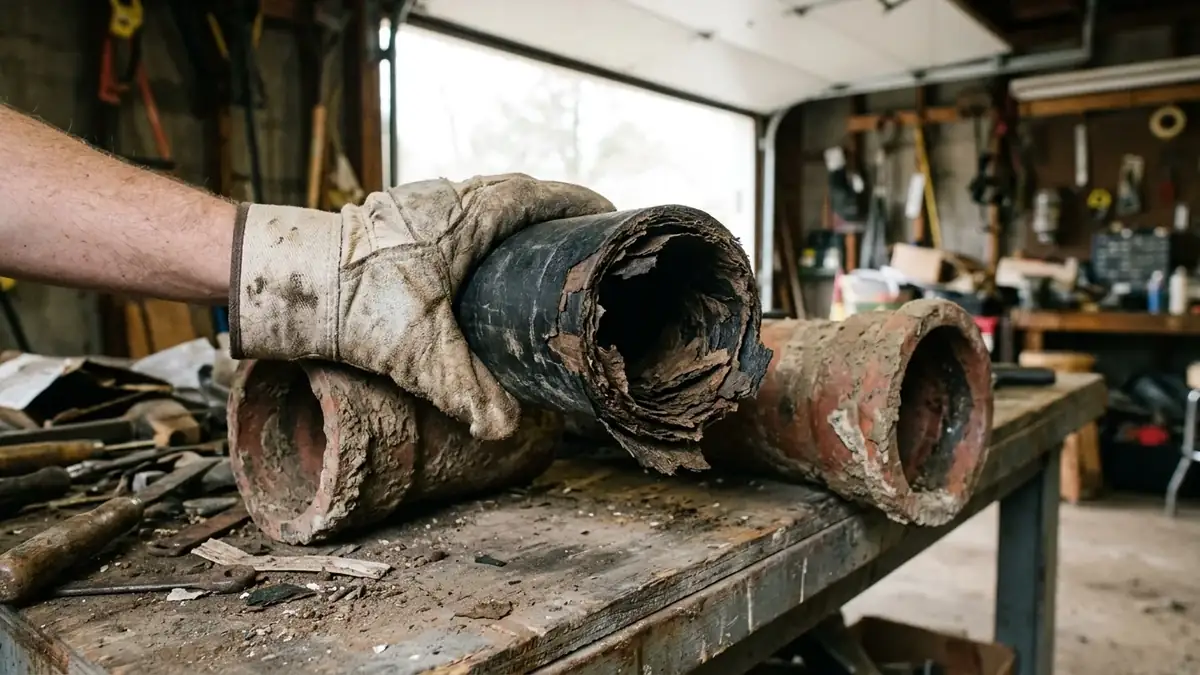
Bursting cares far less about the old pipe's condition, since that pipe is being destroyed anyway. That makes it the usual answer for Orangeburg that has gone oval, for crushed sections and for lines too far gone to line. The guide to Orangeburg, cast iron and clay explains how each material tends to end up.
3. Pipe size afterward
A liner adds a wall inside the old pipe, so the bore ends up slightly smaller, by a few millimetres. On a house lateral the smooth, jointless surface usually makes up for it, but the line does get a touch narrower.
Bursting can keep the same size or go up one, so a 3-inch line can come out as 4-inch, because the head opens a wider path than the pipe it breaks. If an undersized old line is part of the problem, that tips the decision toward bursting.
4. How much ground gets opened
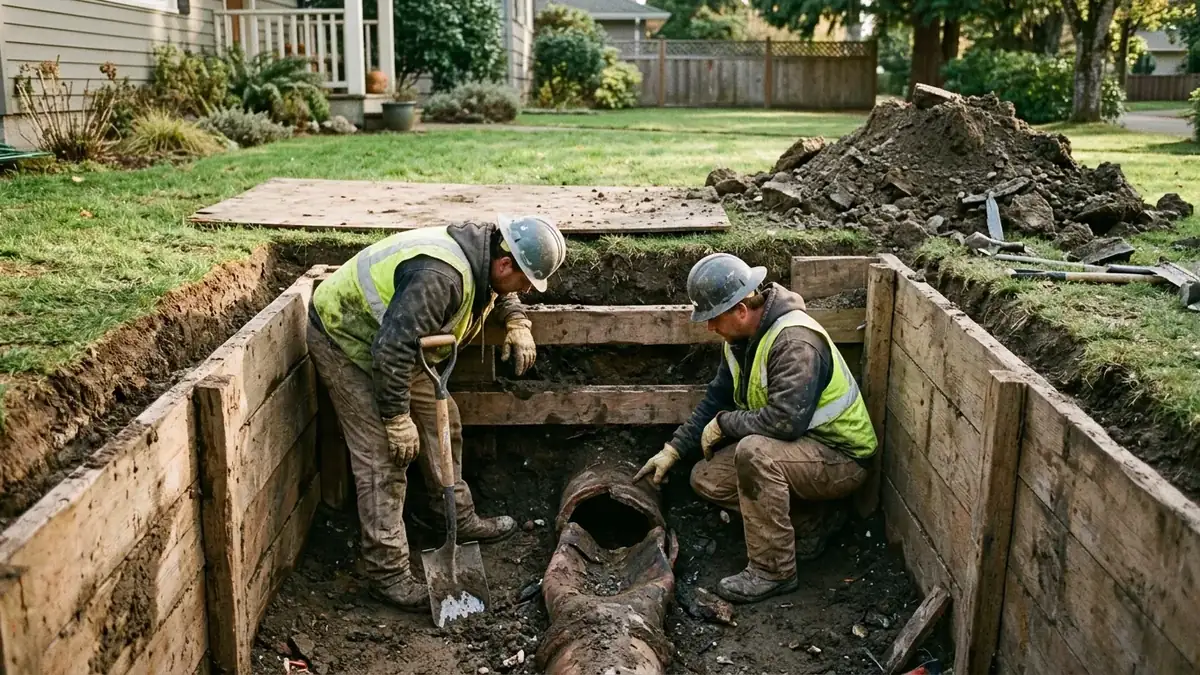
Lining can often run from an existing cleanout, sometimes with one small pit at the far end; where no cleanout exists, the crew installs one. Bursting always needs a pit at each end, one near the house and one at the street tap or property line, each a few feet square. Both stay far smaller than a trench, but lining usually disturbs less of the yard.
5. What else is buried nearby
Bursting shoves broken pipe out into the surrounding soil, so a crew checks what else runs close to the sewer line before choosing it, with every buried utility marked out first. A run with several bends can also be hard to burst, because the head and the new pipe have to be pulled around every one. A liner stays inside the old pipe and pushes on nothing around it, which helps where gas, water or other lines sit close by.
6. Estimated cost and service life
Both sit in an estimated $80 to $250 per foot, so most residential lines land at an estimated $4,000 to $15,000 either way. The method rarely swings the price as much as length, depth and restoration do, and the seven cost factors cover those in detail.
On service life, a cured liner carries a design life of roughly 50 years, while the HDPE that bursting leaves behind is rated for 50 to 100.
When one bad spot changes the answer
Sometimes the camera finds a sound line with one cracked joint or one root entry. Then the comparison is not lining against bursting at all, but a 3 to 10 foot sectional liner over that spot, estimated at $1,500 to $4,000. And where the video shows a sag that holds water, neither method can be counted on to lift it, which is covered in how bellies get fixed.
Quick answers
Is pipe bursting worth it?
When the old pipe is collapsed, flattened or too small, usually yes: it puts a new, jointless HDPE line along the same route with a pit at each end instead of a trench. On a pipe that still holds its shape, lining often does the job with less disturbance.
How long does pipe bursting last?
The HDPE pipe it installs is rated for 50 to 100 years. Its joints are fused, so roots have nowhere to get in along the run.
Is cured in place pipe lining worth it?
It is when the pipe is cracked, rooted or corroded but still round. You get a jointless pipe designed for about 50 years, usually installed from a cleanout, with the yard largely left alone.
What are the limitations of pipe bursting?
It needs a pit at each end, it can't be relied on to lift a sag, and a run with several sharp bends or other lines buried tight against it may rule it out.
Should a cracked sewer line get a liner or new PVC?
If the crack sits in otherwise sound pipe with good grade, a full or spot liner usually suits it. If the line is broken down, sagging or the wrong size, replacement by bursting or a dig makes more sense. The camera footage decides.
Sewer still backing up?
A crew that works on sewer lines can film it and price the fix in writing.