Orangeburg, Cast Iron or Clay? How 3 Old Sewer Pipes Fail and Get Fixed
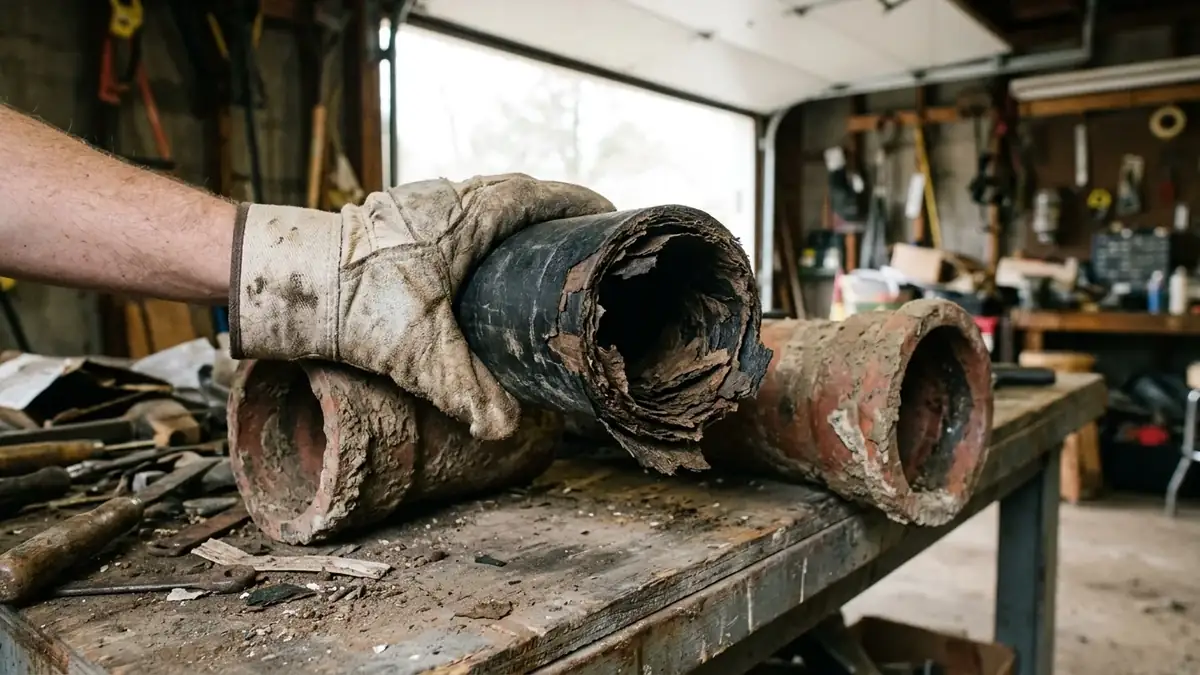
Orangeburg pipe, cast iron and clay are the three materials behind most old sewer laterals that fail today, and each one fails in its own way. That matters because the material often decides the repair before anyone looks at price: one is a strong candidate for lining, one usually gets burst, and one depends on how its joints have held up.
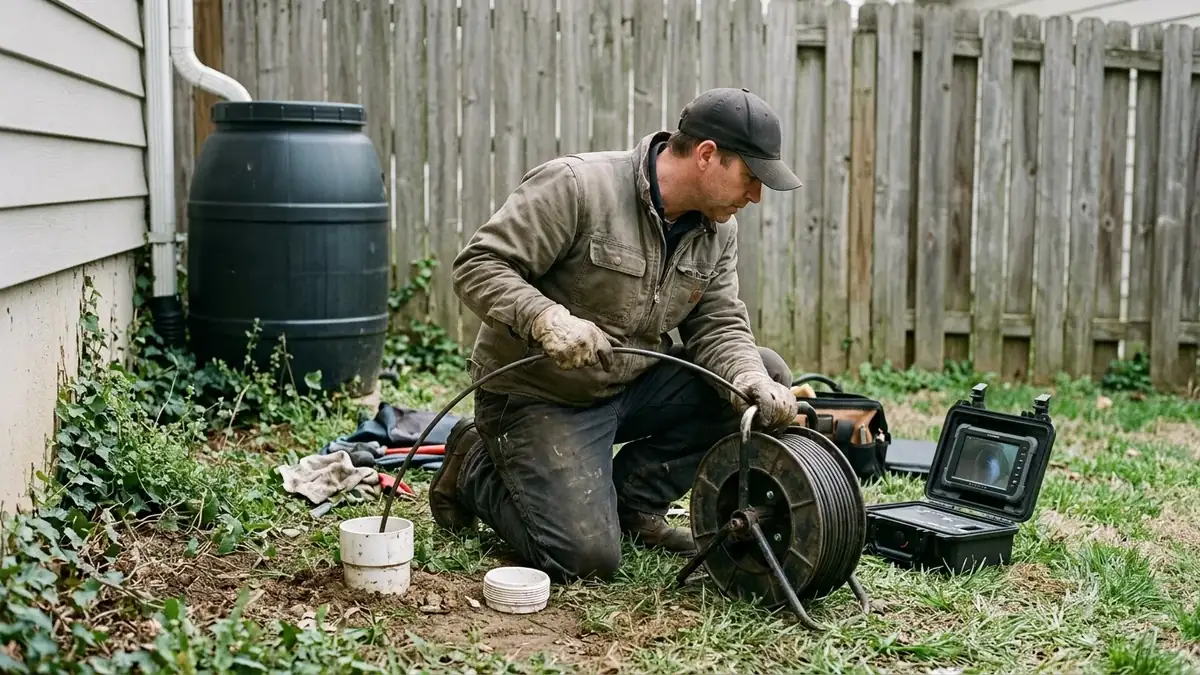
Here is how to tell which you have, what goes wrong with each, and how a crew usually fixes it. In every case the firm answer comes from a camera, because the pipe under the yard is not always the pipe you can see in the basement.
1. Orangeburg: how to spot it
Orangeburg is bituminous fiber pipe, made of layers of wood fiber soaked in tar, and it was laid in many places from roughly 1945 to 1972. It is black, with a dull, tarry surface. You rarely see it indoors, because it was mostly used for the run from the foundation out to the street, sometimes joined to cast iron at the house.
On camera it is easy to recognize once it starts failing: the round pipe goes oval, the inner surface blisters and peels in layers, and roots push through the softened wall.
How Orangeburg fails, and why it gets burst
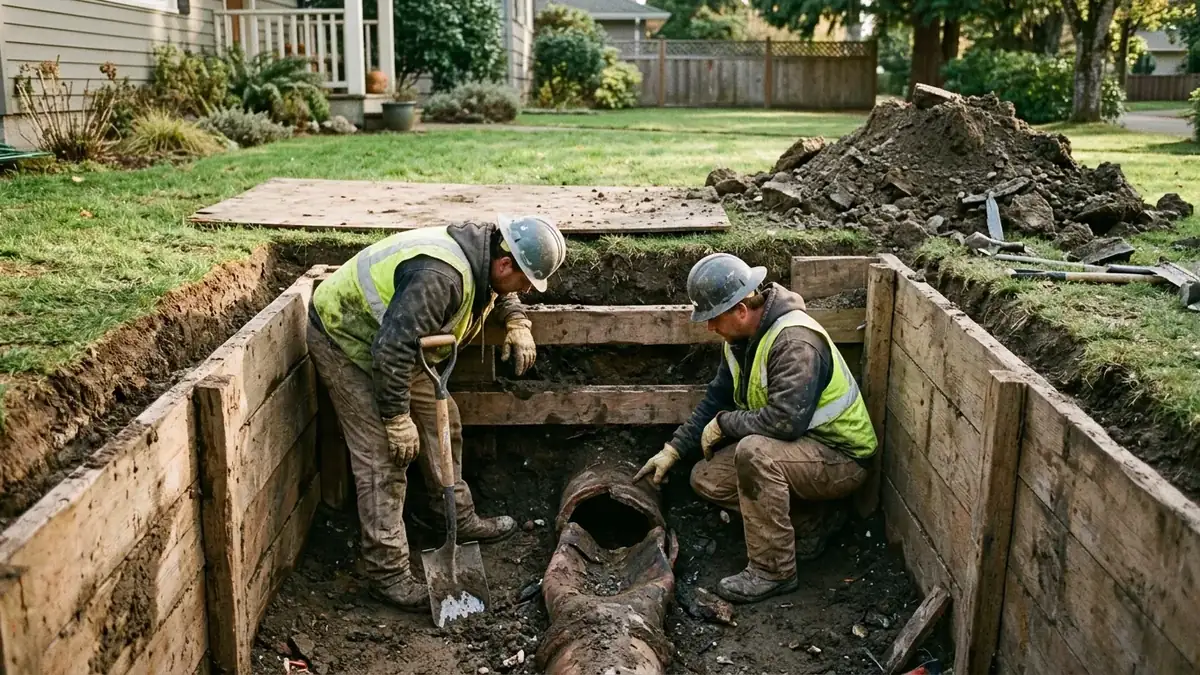
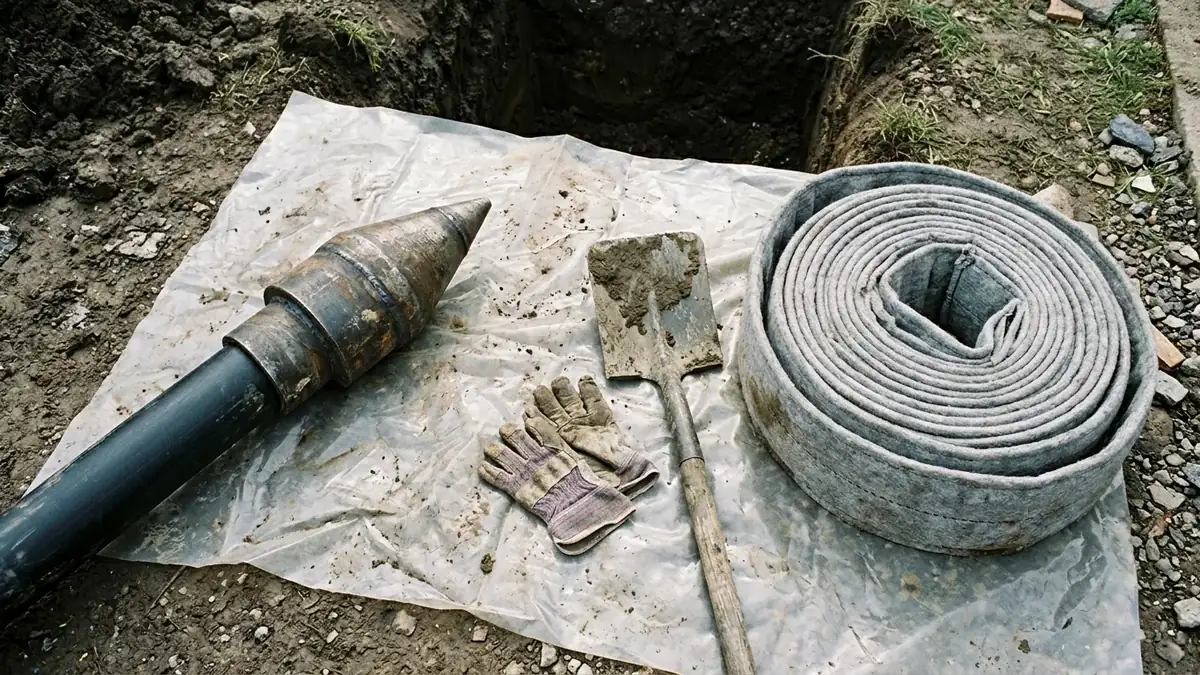
Orangeburg was never as strong as clay or iron. Under the weight of the soil above it, it slowly flattens, and in the worst cases it caves in altogether. Because a liner takes the shape of the pipe it sits in, an oval or collapsed section leaves it nothing to follow, so Orangeburg is normally replaced by bursting: the soft pipe breaks apart easily and new HDPE follows along the same route. Nobody makes it anymore, so a repair means replacing it, not patching in more of the same. If yours has already caved in, repairing a collapsed line covers the options.
2. Cast iron: how to tell you have it
Cast iron is heavy, dark gray to black and rough, with wide bell-shaped hubs where sections join. In a basement or crawl space a magnet will stick to it, which tells it apart from black ABS plastic. Plastic took over from cast iron in new homes gradually from around the 1970s, at different times in different places, so the age of the house is a clue rather than proof.
How cast iron fails, and when it gets lined
Cast iron corrodes from the inside. Scale builds up in rough ridges that snag paper and waste, and over the years the wall thins until it cracks or rusts through. Roots also find the hub joints. As long as the pipe still holds its shape, cast iron is a good lining candidate: the scale is ground out, the line is jetted clean, and a liner cured inside gives it a smooth, jointless bore. Where it has rotted through along a long stretch, bursting is the alternative.
3. Clay: what it looks like and how it fails
Vitrified clay pipe is orange-brown to reddish and comes in short sections, a few feet each, with a joint at every one. The clay itself holds up very well; the joints are the weak point. Roots get in where the seals have aged, and ground movement shifts sections out of line, leaving offsets that catch waste. On camera you see a steady rhythm of joints, with roots or a lip at some of them.
When clay offsets matter, and the fix
Small offsets and roots at the joints are routine findings in an old clay line, and lining handles them well, sealing every joint at once after the roots are cut. A joint that has slipped badly, or a section that has cracked and dropped, may be too far out of line for a liner, and bursting or a short dig takes over. A single bad joint in an otherwise good line is spot-liner territory, estimated at $1,500 to $4,000.
Buying an older house
If a house went up before plastic sewer pipe became standard, and certainly if it is from the 1950s or 60s, a sewer scope before closing is cheap next to what it can find. A camera inspection is estimated at $150 to $500. If the video shows Orangeburg, expect it to need replacing at some point; redoing the whole lateral is estimated at $4,000 to $15,000 for most homes, which is worth knowing while there is still room to talk. What a sewer camera shows explains how to read the report, and how a repair job runs covers what comes next.
Quick answers
Should Orangeburg pipe be replaced?
In most cases, yes. It flattens over time, and once it starts to go oval it keeps deteriorating. Bursting is the usual way to replace it, with new HDPE pulled along the same route.
Can Orangeburg pipe be lined?
Only rarely. A liner needs a round pipe to follow, and Orangeburg that has deformed or collapsed offers none. Bursting is the normal choice.
Should I buy a house with Orangeburg pipe?
Plenty of buyers do, but go in knowing the lateral will probably need replacing. Get the line filmed, get a written quote for the work, and factor it into your decision.
What is the lifespan of a cast iron sewer pipe?
It varies with soil, water and what has gone down the drains, so age alone won't tell you. A camera shows how much scale and thinning there is, and lined cast iron gets a liner designed for about 50 years.
Do I need a sewer scope on a house built in the 1950s?
It is a smart step. Homes from that era can have clay, cast iron or Orangeburg laterals past their best, and a camera inspection, estimated at $150 to $500, shows which before you buy.
Sewer still backing up?
A crew that works on sewer lines can film it and price the fix in writing.