Collapsed Sewer Line: 6 Things to Know About Signs, Causes and Repair
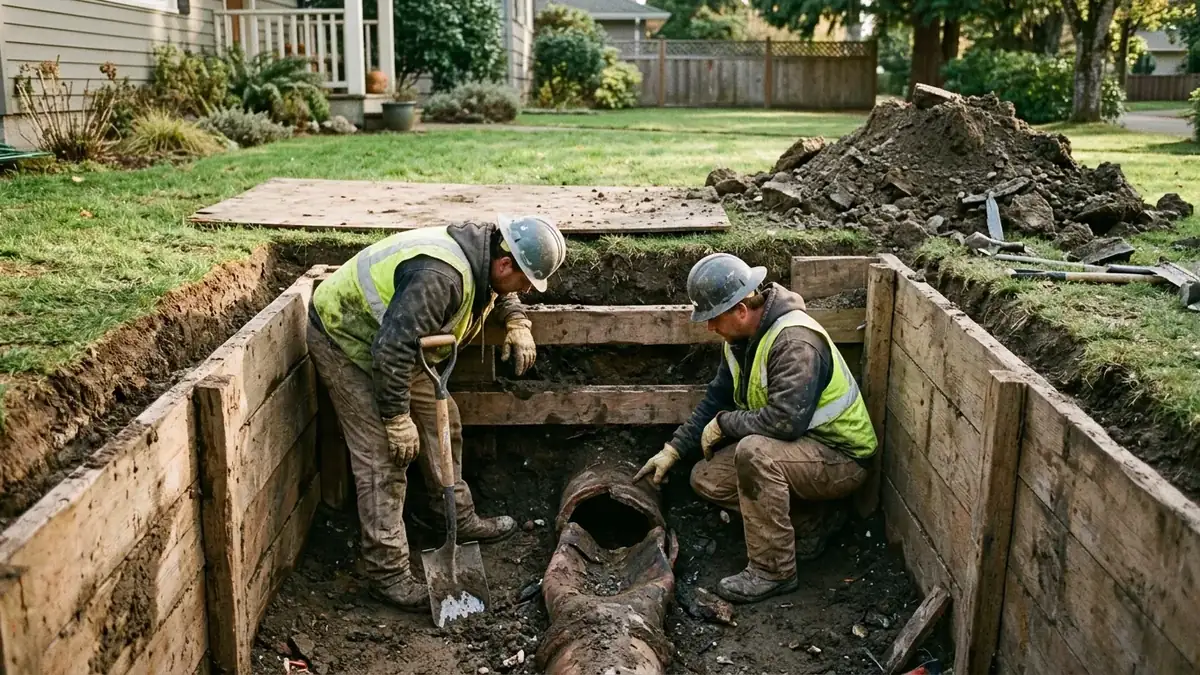
A collapsed sewer line is a pipe that has lost its shape: crushed, caved in or flattened until the opening is partly or completely closed. It is the most serious thing a camera can find in a lateral, partly because it stops flow and partly because it narrows the repair options. Lining, the usual first choice for a failing sewer line, needs a pipe to line, and a collapsed section doesn't have one.
Here are six things worth knowing, from the first signs to what a repair involves and what it is estimated to cost. If sewage is rising indoors right now, stop running water and get a sewer crew out.
1. The signs
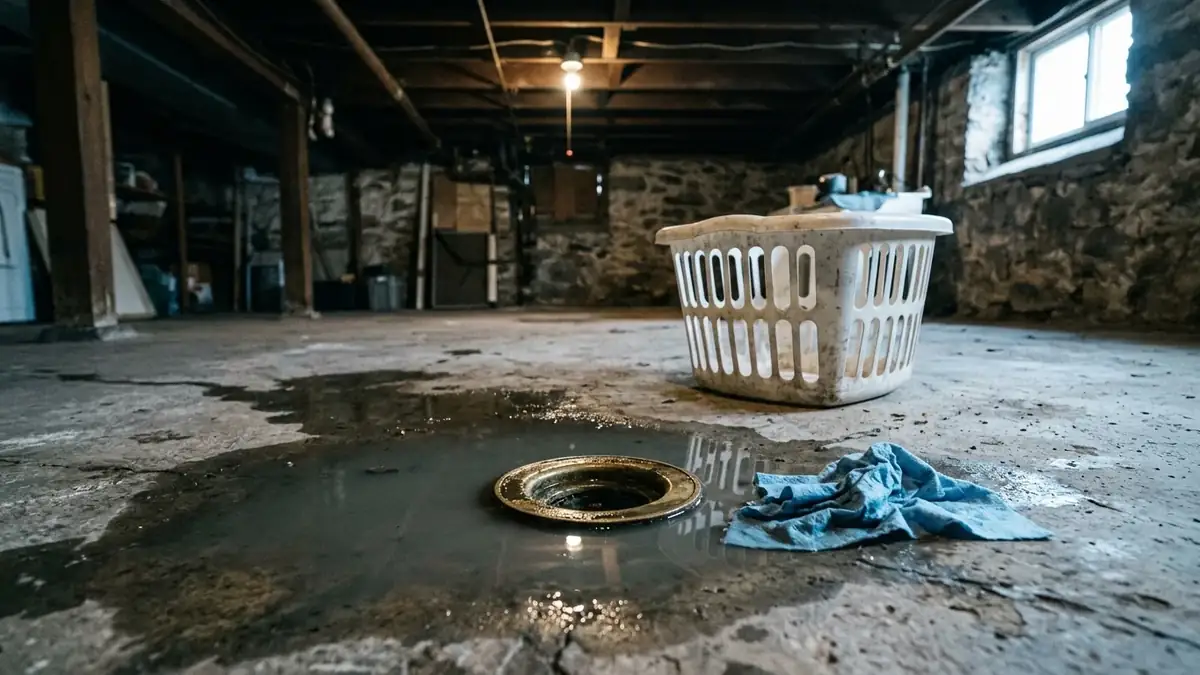
A full collapse usually announces itself: drains throughout the house stop or barely move, the lowest fixture backs up, and a cable machine can't get past one point in the line. A partial collapse is quieter, with slow drains and repeat clogs that look like an everyday blockage. Outside, a dip or sinkhole along the route can mean soil is falling into a broken pipe. The camera settles it, because it stops at the collapse or shows the pipe squeezed out of round. The eight warning signs cover the earlier stages.
2. Why sewer lines collapse
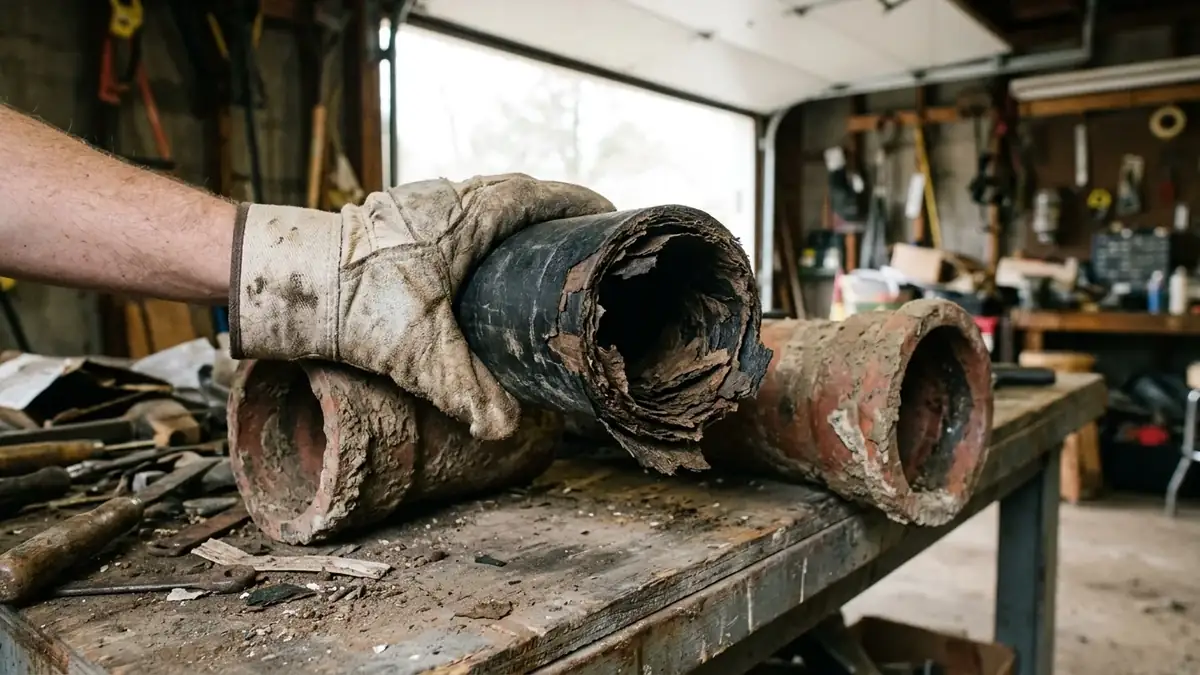
Orangeburg fiber pipe is the classic case: it softens and flattens under the soil load until it caves in. Clay and cast iron collapse less often, but heavy loads over a shallow line, such as vehicles or construction equipment, can crush them. Ground movement shifts and breaks rigid pipe, roots split joints wide enough for sections to drop, and cast iron that has corroded through can give way. Often it is a combination: an aging pipe with a slow leak that has washed out its own support.
3. Will a collapsed sewer line still drain?
A partly collapsed line often still drains, slowly, and some houses go months with only occasional symptoms. That is why a camera sometimes finds a collapse nobody suspected. A fully closed line doesn't drain at all; wastewater backs up into the house or escapes into the ground at the break. Either way it gets worse, not better, as soil keeps moving into the opening.
4. How it gets fixed: bursting or a targeted dig
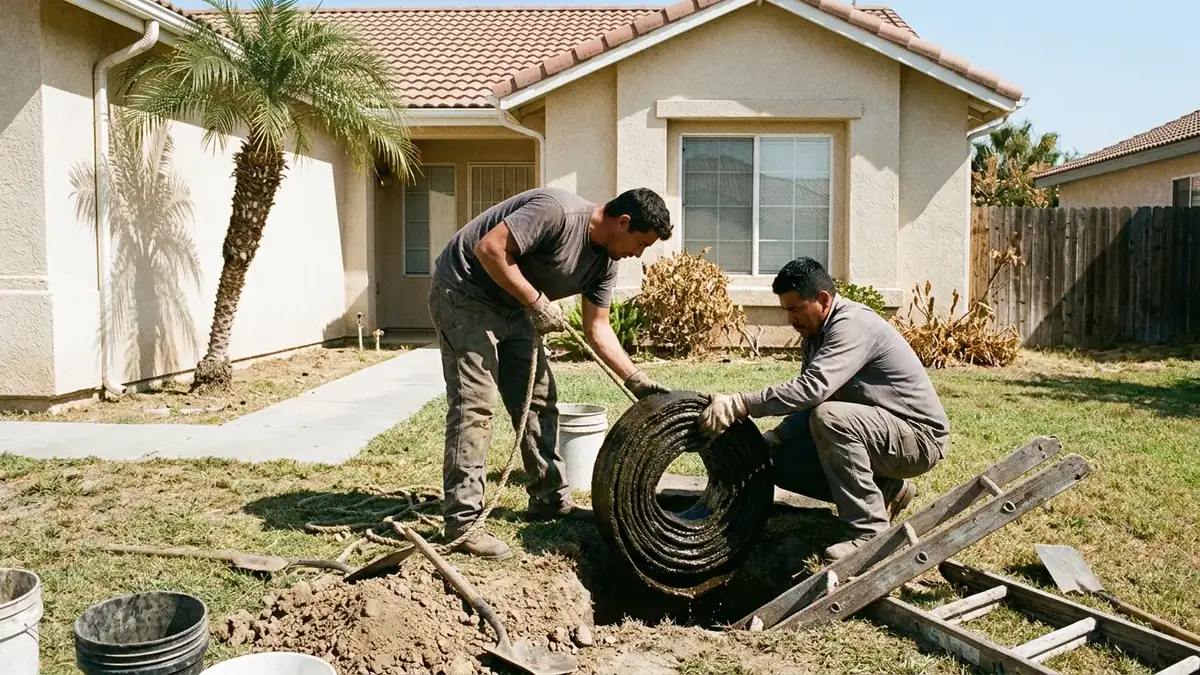
With a collapse, the choice is between pipe bursting and digging at the break. Bursting needs a cable pushed or pulled through the line first, collapsed stretch included. If that works, the bursting head opens the crushed section along with the rest and new HDPE pipe follows, with a pit at each end. If the collapse is too complete for anything to pass, a short dig at that spot, often called a point repair, replaces the broken section, and the rest of the line may then be lined or burst.
The camera and the locator decide between them by showing how long the collapsed stretch is, how deep it is and what sits above it.
5. A collapse under the house
When the collapse is under a slab or a basement floor, the choices narrow. If a cable can get through, bursting between an access point inside and a pit outside may be possible. Otherwise the floor is opened at the break, a small cut rather than a trench across the room, and the section is replaced. Older homes sometimes have Orangeburg outside and cast iron under the house, so knowing the pipe material helps predict where a collapse is likeliest.
6. What a collapsed sewer line costs
Bursting is estimated at $80 to $250 per foot, which puts replacing most residential lines at an estimated $4,000 to $15,000, with deep, long or street-crossing runs above that. A point repair is priced by depth and by what has to be removed and replaced over the break, a lawn being very different from a driveway or a street. A plumbing permit applies in almost every city, with a right-of-way permit added for work in the sidewalk or street. All of it belongs on a written quote before work starts, and how the job is run shows the order.
What to do in the meantime
Keep water use to a minimum until the line is repaired. Each flush or load of laundry adds to what is either backing up into the house or leaking into the soil. Avoid parking or driving over the area of the break, and keep children and pets away from any sinkhole or soft ground over the line.
Quick answers
What are the signs of a collapsed sewer line?
Drains throughout the house stopping or barely moving, backups at the lowest fixture, a cable that can't pass one spot, and sometimes a dip or sinkhole in the yard. A camera inspection confirms it.
Why would a sewer line collapse?
Old Orangeburg flattening under the soil load is the classic cause. Heavy loads over shallow pipe, ground movement, roots and corroded cast iron can all lead to a collapse as well.
Will a collapsed sewer line still drain?
A partial collapse often drains slowly. A complete one stops flow, so wastewater backs up into the house or leaks into the ground at the break.
What does a collapsed sewer pipe cost to repair?
Replacing a full line by bursting is estimated at $80 to $250 per foot, or an estimated $4,000 to $15,000 for most homes. A point repair depends on depth and what sits above the break.
Can a collapsed sewer line be lined?
Not the collapsed section itself, because a liner needs a pipe to follow. That stretch is burst or dug out, and the rest of the line can be lined if it is sound.
Sewer still backing up?
A crew that works on sewer lines can film it and price the fix in writing.