8 Signs of a Broken Sewer Line, Inside the House and Out
The signs of a broken sewer line rarely arrive as one dramatic event. They show up as small, repeated annoyances that are easy to blame on an ordinary clog: a tub that drains slowly, a toilet that burbles, a smell along the side of the house. What gives the main line away is a pattern, especially when more than one fixture is involved or the trouble keeps returning.
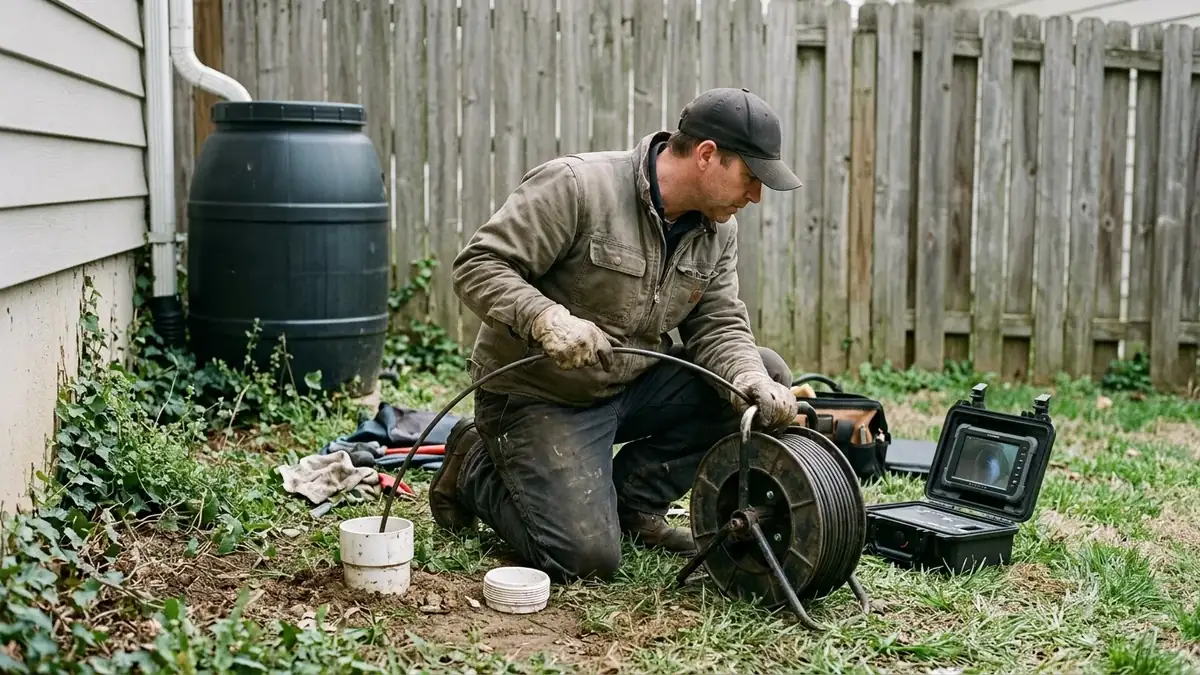
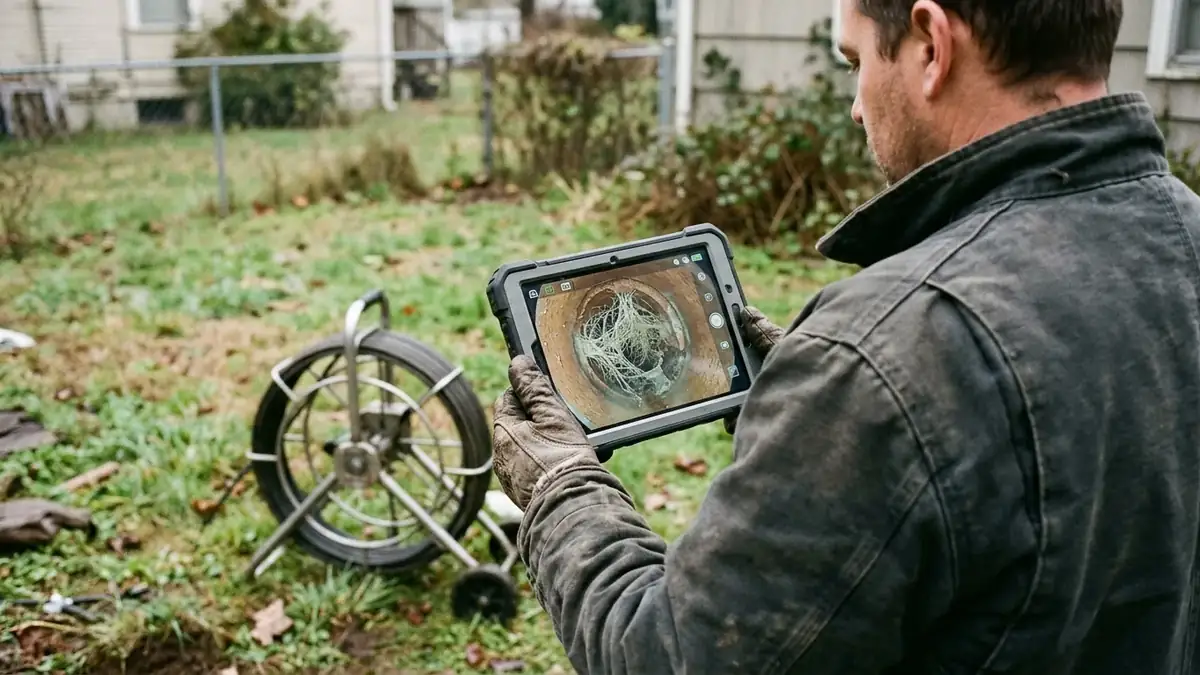
Here are eight signs, five you notice indoors and three out in the yard, plus what happens if a broken line is left alone. A camera inspection turns a hunch into a measured answer, and what the video shows explains what you will see on it.
1. Several drains slow down at once
One slow sink is usually a clog in that sink's own drain. When the tub, the shower and a toilet all start draining sluggishly in the same week, the blockage or break is somewhere they share, and that is the main sewer line. Note which fixtures are affected; the lowest ones usually go first.
2. Toilets gurgle when something else drains
A gurgle from the toilet when the washing machine empties or the tub drains means air is being pushed back up through its trap. Water is struggling to get past something downstream, whether a partial blockage, a root mass or a broken section, and the displaced air has nowhere else to go.
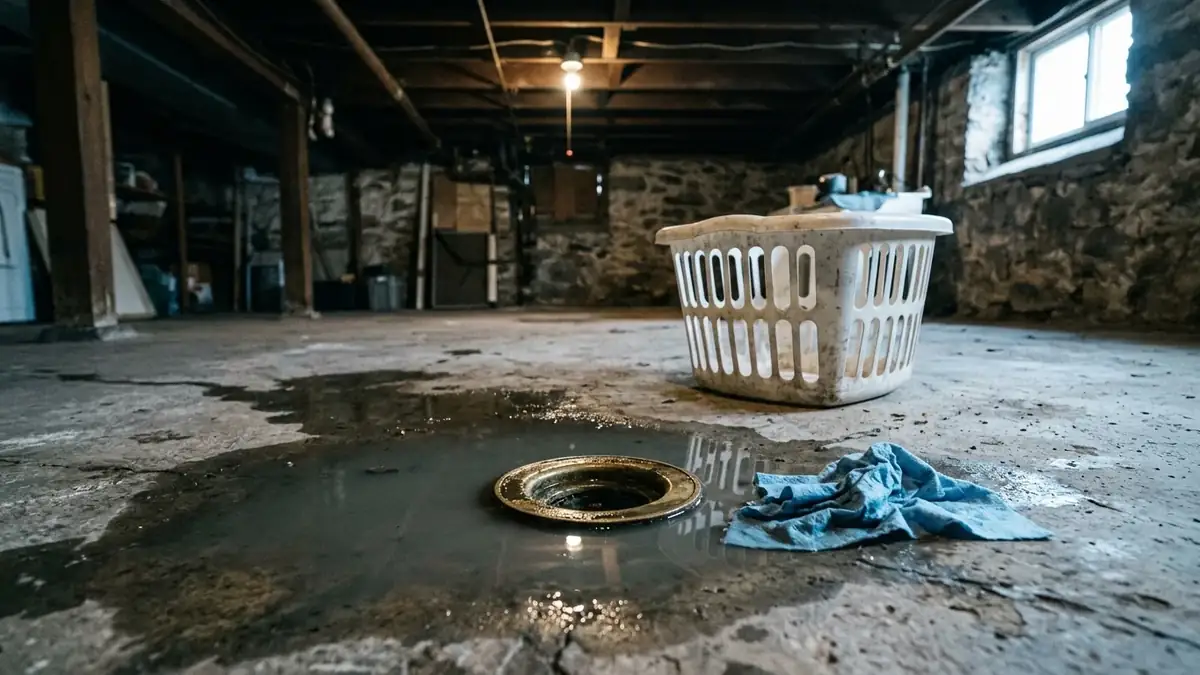
3. Sewage backs up at the lowest drain
Wastewater that can't leave the house rises at the lowest opening first. In a basement that is the floor drain; in a slab home it is often a ground-floor shower or tub. Dirty water coming up there when a toilet is flushed upstairs is the clearest indoor sign that the main line can no longer carry the flow.
4. Clogs come back after snaking
A cable machine pushed through the line can open a path through roots or debris, and the drains work again for a while. If the same backup returns in weeks or months, something in the pipe keeps catching waste. Roots regrowing through a cracked joint are the most common reason, and the fixes for tree roots compare which ones last.
Outside: 5. a sewer smell, 6. a soggy or green strip, 7. a dip in the ground
5. A sewer smell near the cleanout or over part of the yard, with nothing backing up indoors, can mean gas is escaping through a crack and rising up through the ground.
6. A strip of lawn that stays wet in dry weather, or grows greener and faster than the rest, often traces the line's route. Leaking wastewater is feeding it.
7. A dip, a soft spot or a small sinkhole over the line means soil is washing into a break. Treat that one quickly, because the hollow can spread under a walkway or driveway as easily as under grass.
8. Odors or pests indoors
A sewer smell inside the house with no obvious source is worth chasing. Start by running water into floor drains and fixtures that rarely get used, because a dry trap lets sewer gas in and costs nothing to fix. If the smell persists, a cracked line near the foundation may be the cause. A break also gives sewer insects and, in some areas, rats a path toward the house.
What happens if a broken line is left alone
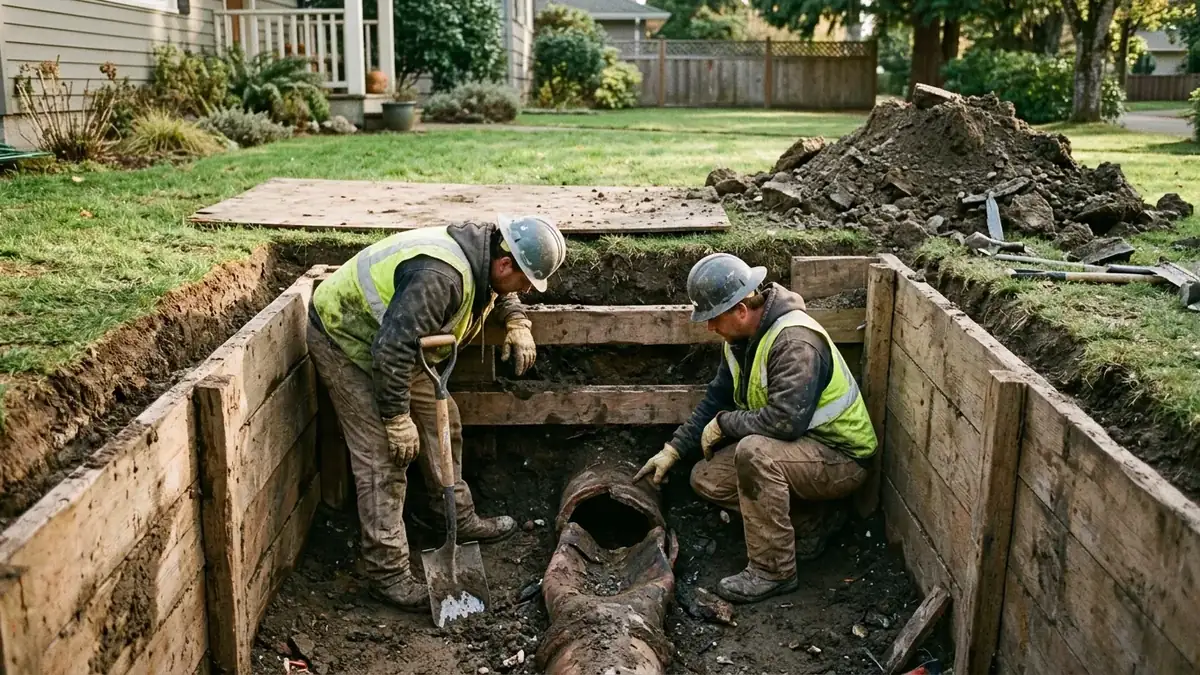
Sewer laterals are gravity lines, not pressure pipes, so they rarely burst the way a supply pipe can. They crack, separate at joints, corrode through or collapse, usually because of roots, ground movement, age or a heavy load overhead. Once a break opens, wastewater seeps out into the soil and soil washes in, so the damage spreads rather than holding steady. Backups grow more frequent, and a crack a spot liner could have covered can become a section that needs replacing.
How urgent is it?
Sewage in the house is urgent: stop running water and call. Recurring slow drains or a damp strip in the yard are not an emergency, but they are reason enough to book a camera inspection within weeks rather than years. A sewer crew in your area can film the line and tell you whether you are looking at a patch or the whole run.
Quick answers
What are four signs that your sewer line is broken?
Several drains slowing at the same time, toilets that gurgle when other fixtures drain, sewage rising in the lowest drain, and clogs that keep returning after the line is snaked.
How do you tell if your sewer line is broken outside?
Look for a sewer smell in the yard, a strip of lawn that is soggier or greener than the rest, and any dip or sinkhole along the line's route. A camera inspection confirms where the break is.
What happens if a sewer line breaks?
Wastewater leaks into the soil and soil washes into the pipe, so backups get more frequent and the damage grows. Left long enough, a crack can turn into a collapse.
What causes a sewer pipe to burst?
Sewer lines carry no water pressure, so they crack, separate or collapse rather than burst. Roots, shifting soil, corrosion, age and heavy loads above the line are the usual culprits.
How do I know if my sewer line needs to be replaced?
Film it. One bad joint can often be fixed with a spot liner; cracks and roots along much of the run point to lining the whole line, and a collapse points to bursting or a dig.
Sewer still backing up?
A crew that works on sewer lines can film it and price the fix in writing.