Sewer Camera Inspection: 7 Things the Video Shows Before Any Repair
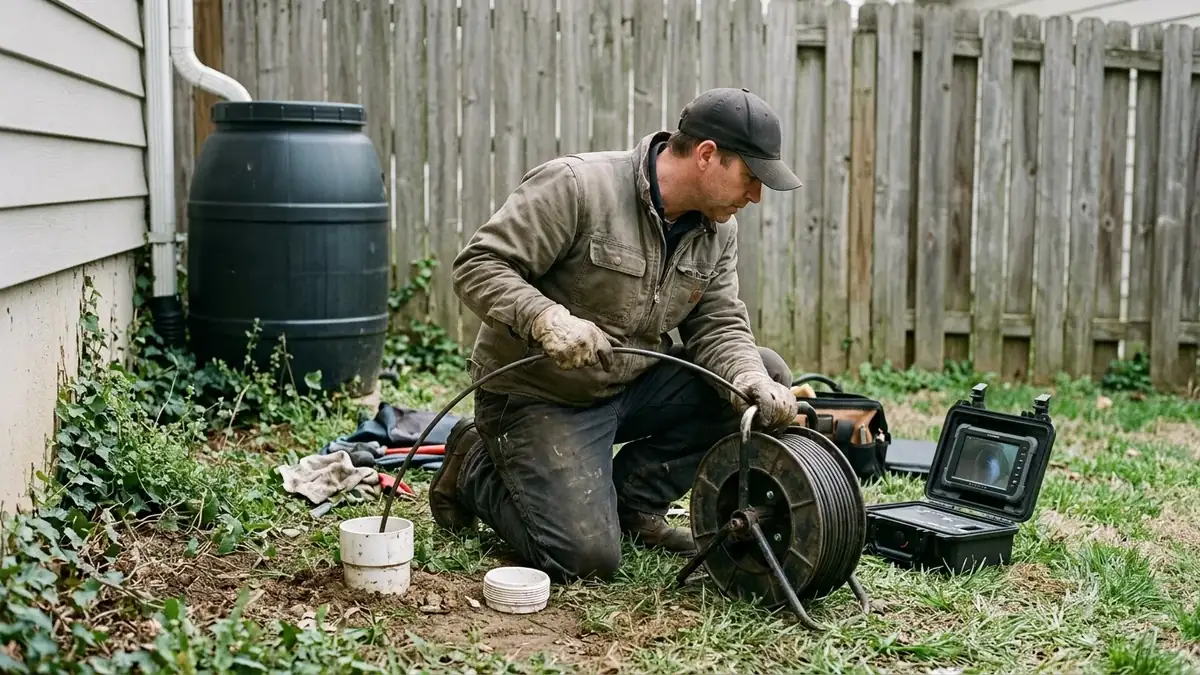
A sewer camera inspection is the step that turns guesses about a backed-up line into facts. A waterproof camera on a stiff push cable goes in through a cleanout and travels down the lateral toward the main, recording as it goes, while a counter logs the distance. Every defect ends up on video with a footage number, so you know what is wrong and exactly where.
That matters because the fix depends on what the video shows; picking a method before the line has been filmed is guesswork. Here is how an inspection works, the seven things it reveals, and what it is estimated to cost.
How the inspection works
The camera usually goes in from an outdoor cleanout, or from one in a basement or garage, and a cleanout may need adding first if the house has none. Running a little water helps show where it pools. The camera head carries a small transmitter, and a locator above ground picks up its signal, so the crew can mark the line's route and depth at any defect. Ask for the recording, or at least watch it with whoever ran the camera, since every later quote rests on that footage.
1 and 2: Roots and cracks
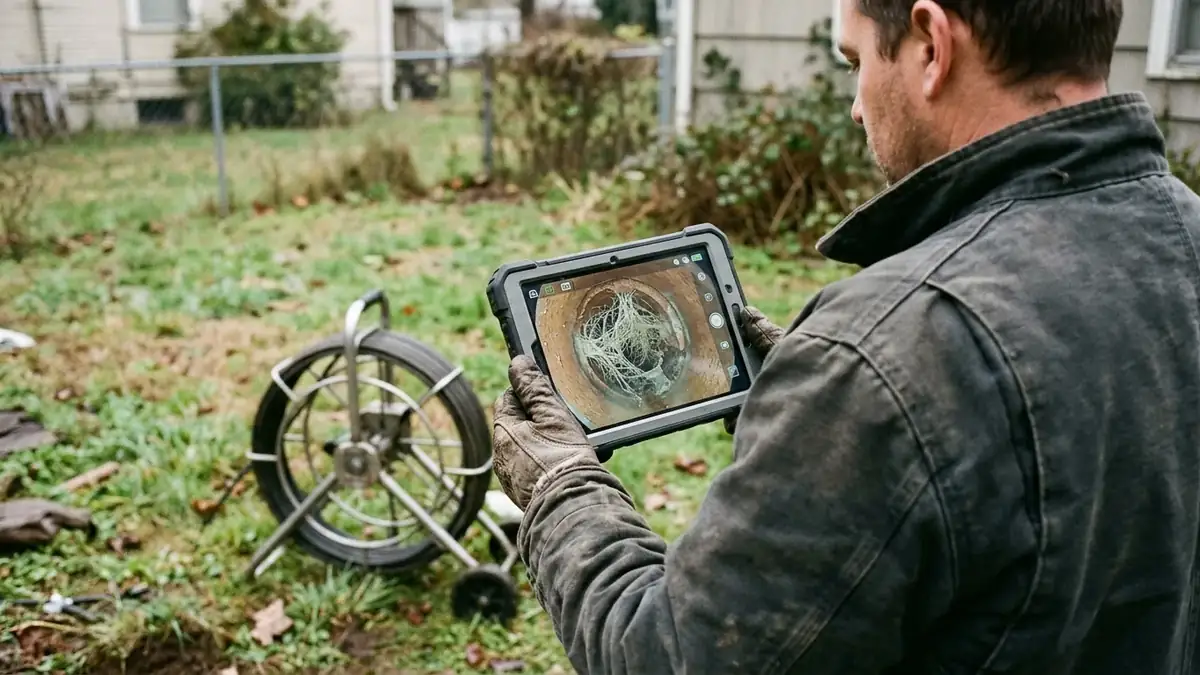
Roots show up as hair-like strands or a dense mat, usually at joints, which tells you where the pipe is open to the soil. Cracks appear as dark lines along or around the pipe wall, sometimes with soil or water seeping in. A few roots at one joint and a hairline crack are very different findings from roots at every joint, and that count matters when choosing between a patch and the whole run. The guide to root fixes compares the options.
3 and 4: Offsets and bellies
An offset is a joint where one section has shifted, leaving a lip that catches paper. Small offsets are common in clay and can be lined over; a badly shifted joint may need replacing. A belly shows up as water standing in the bottom of the pipe over a stretch, sometimes deep enough to cover the lens. Bellies matter because a liner can't correct them, as the belly guide explains.
5 and 6: Corrosion and collapse
In cast iron, the camera shows scale, rough ridges of corrosion inside the pipe, and sometimes holes where the wall has thinned through. Once that scale is ground out, a pipe that still holds its shape can take a liner. A collapse shows as a pipe squeezed out of round, or a point the camera simply can't pass, and it rules out lining for that section.
7: What the pipe is made of
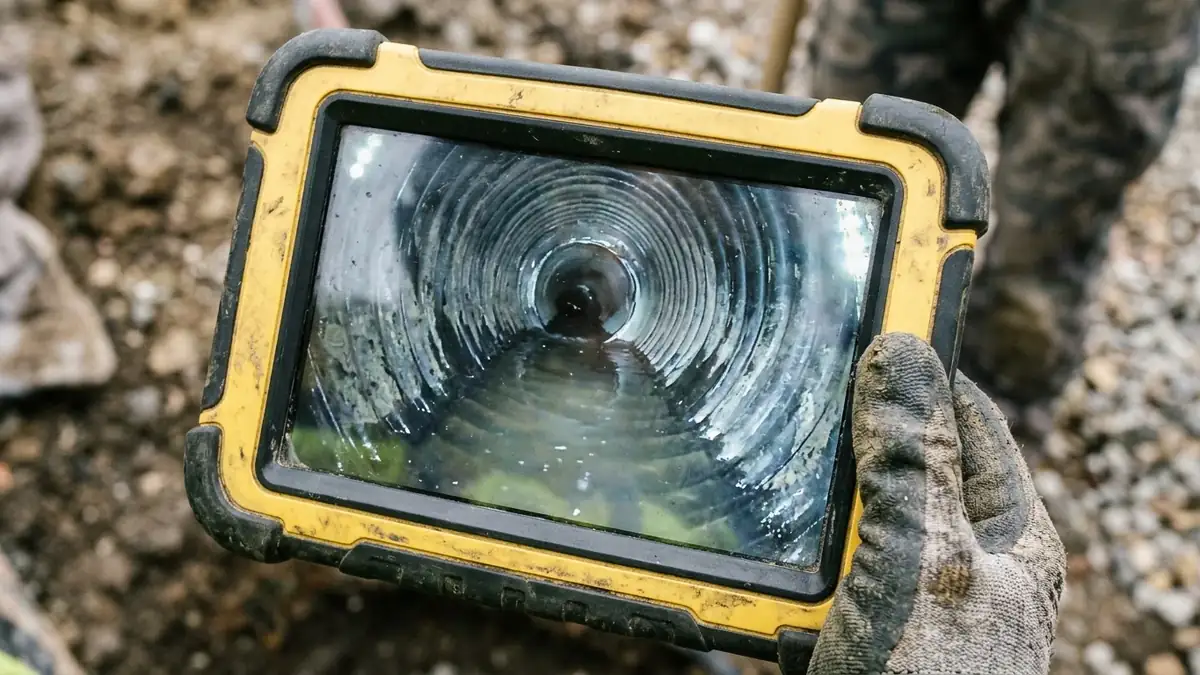
The video identifies the material, which shapes every recommendation after it. PVC is smooth and pale inside, clay is orange-brown with joints every few feet, cast iron is dark and often scaled, and Orangeburg is black with a layered surface that blisters and goes oval. Many older lines change material along the way, with cast iron under the house and clay or Orangeburg out in the yard, and the camera shows where each one starts.
What a sewer camera inspection costs
A camera inspection is estimated at $150 to $500, depending on the length of the line, how easy the access is, and whether locating and a written report are included. Many companies take the inspection fee off the repair bill when the work goes ahead. A line that is backed up may need clearing first so the camera can see. To book one, find a crew near you.
When to get one
Before buying a house, especially an older one: a 1950s home can have clay, cast iron or Orangeburg out to the street, and a general home inspection usually doesn't put a camera in the sewer line. Also when clogs keep coming back after snaking, when several drains slow at once, and before agreeing to any lining or bursting quote. A well-run job is filmed again at the end so you can compare before and after; see the steps of a job.
Finding the sewer line in your yard
People often ask how to find where their line runs. Start where it leaves the house, at the cleanout or the point where the pipe passes through the foundation, and look for an outdoor cleanout near that side of the house. The reliable method is the locator: with the camera inside the pipe, its transmitter can be traced from the surface and the route marked with paint or flags. That is also how a crew decides where an access pit should go. Call your local utility-marking service before digging anywhere near it.
Quick answers
How much does a sewer line camera inspection cost?
It is estimated at $150 to $500, depending on line length, access and whether locating and a report are included. Many companies credit it toward a repair.
Do I need a sewer scope inspection when buying a house?
It is worth it for most homes and especially older ones, since a general inspection usually doesn't film the sewer line. The video shows the pipe material and any roots, cracks, bellies or collapse.
How do I locate the sewer line in my yard?
A camera with a transmitter in its head is run down the line, and a locator above ground follows the signal to mark the route and depth. Start from the cleanout or where the pipe leaves the house.
What does a sewer camera show?
Roots, cracks, offset joints, bellies, corrosion and scale, collapsed sections and the pipe material, each logged with its distance from the access point.
How can I tell if my sewer line footage looks good?
A healthy line shows a round, clean pipe with tight joints, a steady fall and no standing water, roots or cracks. If you have footage already, a contractor can review it and explain what it shows.
Sewer still backing up?
A crew that works on sewer lines can film it and price the fix in writing.