Who Pays for a Broken Sewer Line? 6 Answers on Insurance, the City and You
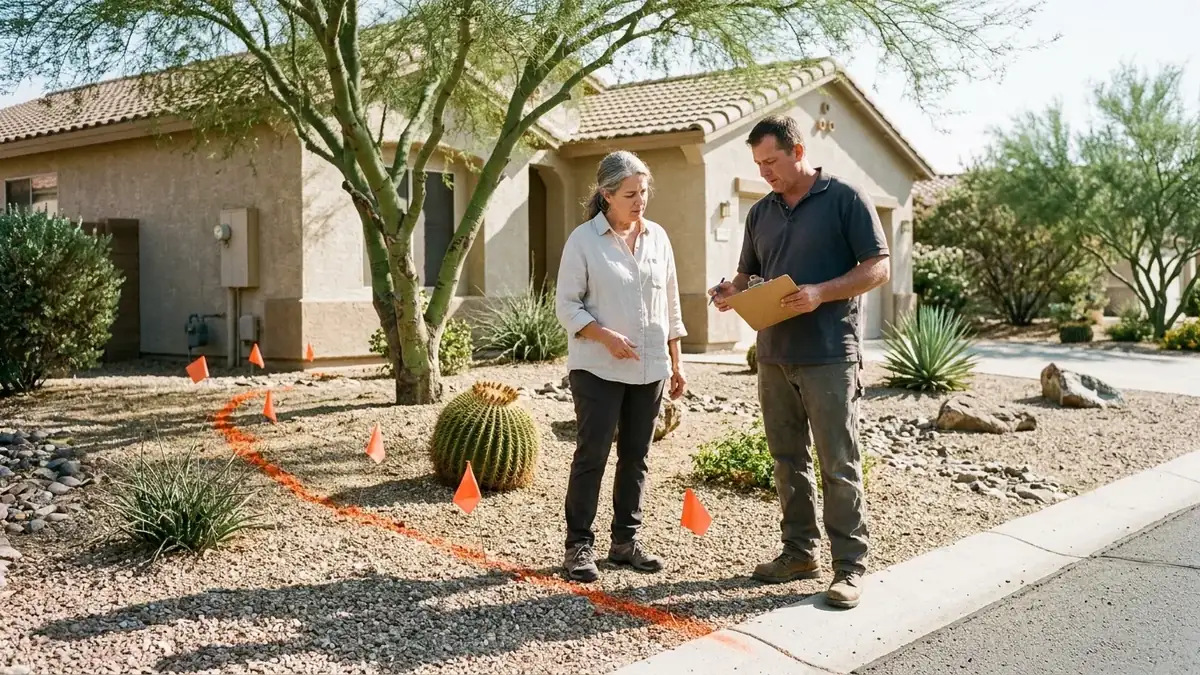
Who pays for a broken sewer line depends mostly on where the break is. The pipe that carries wastewater from your house to the public sewer main, the lateral, is usually the homeowner's responsibility, while the main under the street belongs to the city or the sewer utility. Exactly where one ends and the other begins varies from city to city, and that boundary is the first thing to pin down.
Below are six answers covering ownership, the city's role, permits, insurance, sewer line warranties and what happens when a house is being sold. A camera inspection that shows exactly where the break is helps with every one of them.
1. Who owns the line from the house to the street?
In most places the lateral belongs to the homeowner all the way out to the public main, though some cities stop the owner's share at the property line and take over from there. The rules are set locally, so check with your city or sewer utility; many publish them, and a contractor who works in your area will usually know. Roots don't change who owns the pipe, although rules can differ where a city street tree is involved.
2. When does the city pay?
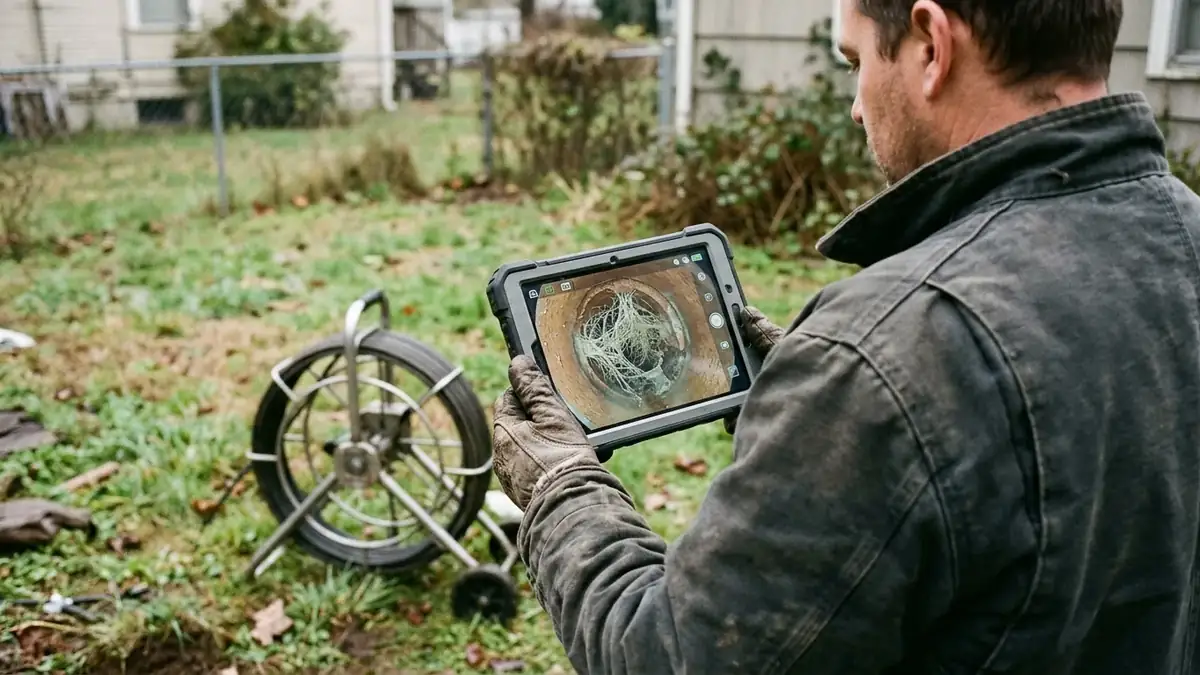
If the problem is in the public main, it is the city's or the utility's to fix. Clues that point that way include several neighbors having backups at the same time, or a camera that runs clean all the way to the connection. If the break is in your lateral, the city generally won't pay for it, though some cities run lateral programs, so ask whether yours does. A camera report that gives the defect's distance from the house is the clearest way to show which side of the boundary it is on, and what a sewer camera shows explains how that report reads.
3. Do you need a permit?
Almost certainly. Nearly every city requires a plumbing permit for work on a sewer lateral, and digging in a public sidewalk or street adds a right-of-way permit. The licensed contractor doing the work normally pulls the permit and arranges the inspection, and the fee is listed on the quote, so you pay it either way. Keep a copy with the house records once the job passes.
4. Will homeowners insurance cover it?
Sometimes, often not, and the wording of your own policy decides it. Standard homeowners policies often exclude wear and tear, gradual deterioration and root intrusion, which are the reasons most laterals fail. Some policies may cover sudden, accidental damage to the line, depending on how they are written. Separate service-line coverage, usually added to a policy as an endorsement, is designed for the buried lines between the house and the street.
Read your policy or ask your agent before assuming either way; we can't tell you what yours covers. If you do contact your insurer, have the camera video and the written quote ready, since they show what failed and what the repair involves. Questions about roots and collapsed lines come down to that same wording.
5. Is a sewer line warranty worth it?
Utilities and private companies sell protection plans for the line from the house to the street, often by mail. Whether one is worth it depends on the terms. Look at the yearly cost, the cap per repair, whether lining, bursting and surface restoration are included, whether the part under the sidewalk or street is covered, and any waiting period or exclusion for problems that existed before you signed up. Weigh that against the estimates: a spot repair is estimated at $1,500 to $4,000 and most full lines at an estimated $4,000 to $15,000, as the cost guide details.
6. Who pays when the house is being sold?
A buyer's sewer scope often finds problems the seller didn't know about. Who pays then becomes part of the negotiation: the seller repairs the line before closing, offers a credit, or the price is adjusted, depending on the market and the contract. Sellers who have the line filmed and fixed before listing avoid surprises, and buyers who get a scope know what they are taking on. Either way, a written quote for the specific repair the video calls for, rather than a guess at a whole replacement, keeps the conversation grounded.
Before you call anyone
Get the line filmed and located, so you know what failed and where. Find out from your city where the homeowner's portion ends. Check your policy and any warranty you hold. Then get a written quote that lists the method, the footage, the permits and the restoration. With those four things in hand, the question of who pays usually answers itself. The FAQ page has more short answers, and a sewer crew near you can handle the camera step.
Quick answers
Will homeowners insurance cover a broken sewer line?
It depends on your policy. Standard policies often exclude wear, tear, roots and gradual deterioration but may cover sudden accidental damage. Separate service-line coverage exists. Check your own policy.
Does homeowners insurance cover tree roots in sewer lines?
Root damage is often treated as gradual deterioration and excluded under standard policies, but wording varies. Service-line coverage may treat it differently, so read the terms or ask your agent.
Who owns the sewer line between the house and the street?
In most cities the owner of the house, either out to the main or only to the property line. The main itself belongs to the city or the sewer utility.
Do I need a permit to replace a sewer line?
In almost every city, yes: a plumbing permit for the lateral and a right-of-way permit if any work is in the sidewalk or street. The contractor normally pulls it.
Is a sewer line warranty worth it?
It can be, if the coverage cap, the included methods and the exclusions fit your line. Read the terms closely, especially waiting periods and pre-existing conditions.
Sewer still backing up?
A crew that works on sewer lines can film it and price the fix in writing.